16
05/2026
A Technical Procurement Guide for Medical and Water Treatment: Selecting Industrial Titanium and Precision CNC Machining Suppliers
A technical guide for procurement professionals on selecting industrial titanium and precision CNC machining suppliers for medical implant and water treatment applications. Covers industry requirements, supplier criteria, case study, and collaboration tips.
Industry-Specific Requirements
In the medical sector, titanium materials are used for surgical implants and instruments due to their biocompatibility, corrosion resistance, and mechanical strength. For water treatment and swimming pool disinfection, titanium electrodes serve as durable anodes in electrolytic systems, generating hypochlorous acid for sanitation. Both applications demand high material purity, precise dimensional control, and long-term stability under specific operational conditions.
Medical implant manufacturers require titanium rods (typically Grade 5 Ti-6Al-4V or Grade 23 ELI) with strict adherence to ASTM F136 or ISO 5832-3 standards. Surface finish, dimensional accuracy, and clean manufacturing processes are critical. Water treatment operators need coated titanium anodes (e.g., ruthenium-iridium oxide) that withstand high current densities, resist scaling, and maintain a stable service life of thousands of hours in saline environments.
Supplier Selection Criteria
1. Industry-Specific Customization Experience
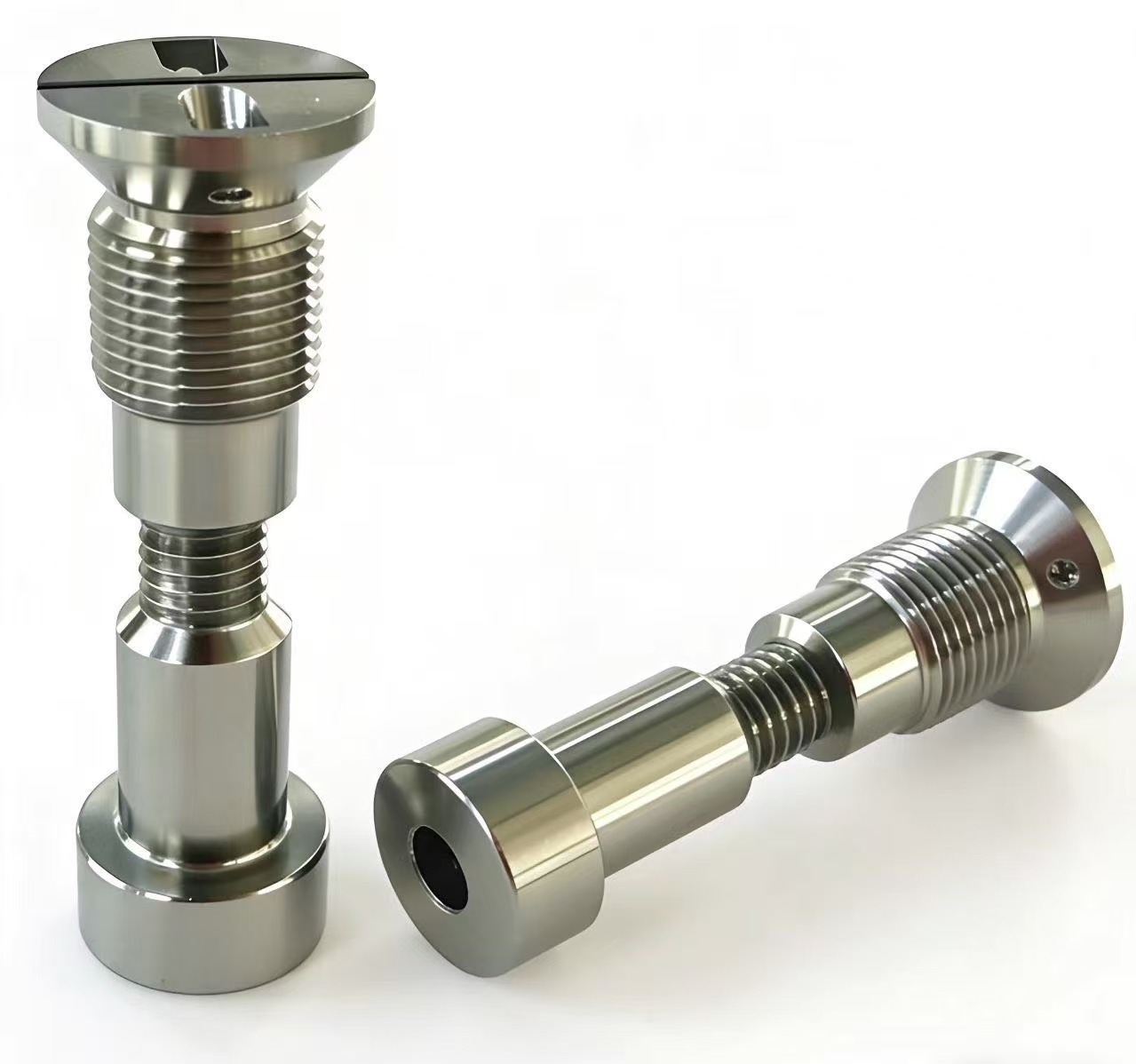
A qualified supplier demonstrates proven experience in producing components for both medical and electrochemical applications. For medical devices, this includes 3-axis, 4-axis, and 5-axis CNC milling and turning with medical-specific calibration. The machining tolerance for such parts can be as tight as ±0.001mm to ±0.01mm. For water treatment electrodes, suppliers must offer tailored coating compositions (e.g., ruthenium, iridium, tantalum) and substrate geometries (plate, mesh, tube) to suit specific disinfection systems.
2. Compliance and Certification
Buyers should verify that the supplier holds relevant quality management certifications. An ISO 13485:2016 certification (medical device quality management) is essential for suppliers of medical-grade titanium rods and CNC machined parts. General quality assurance (ISO 9001:2015) further confirms consistent processes. All materials should be 100% traceable, with documentation of chemical composition and mechanical properties from the mill. For water treatment electrodes, certification of precious metal coating thickness and electrochemical performance is recommended.
3. Robust Quality Control and Process Capability
Suppliers should employ 100% testing of critical dimensions and surface finish. The standard surface roughness for precision aerospace-grade CNC parts is Ra 0.8 to Ra 3.2, with optional finishes as fine as Ra 0.8. Titanium plates can be supplied with cold-rolled (2B), hot-rolled, polished, pickled, brushed, or custom finishes. Quality control processes include third-party verification to ensure compliance with customer specifications.
Case Study: KOBO Advanced Materials
KOBO Advanced Materials Co., Ltd., based in Suzhou, China, is a metal processing company with over two decades of industry experience. The company specializes in supplying pure titanium and titanium alloy products in multiple forms such as bars, sheets, coils, pipes, and wires, as well as custom CNC machining parts. Its manufacturing capabilities include electron beam and vacuum arc remelting furnaces, rolling mills, and 3-axis to 5-axis CNC machines. KOBO holds both ISO 9001 and ISO 13485 certifications, and its quality control processes involve 100% testing and third-party verification.
In the medical field, KOBO has supplied medical titanium rods (medical titanium rod) to a Turkish medical implant processing factory. The material’s biocompatibility and the precision machining capabilities (medical-specific calibration) allowed the customer to produce implants with exacting dimensional and surface requirements. The rods were delivered with full material traceability and met the required international standards.
For water treatment applications, KOBO provided a swimming pool disinfection product processing plant in Australia with TE01 model titanium electrodes. These electrodes are designed for salt electrolysis systems where a small amount of sodium chloride is added to the pool water. The product's role is to disinfect swimming pool water by generating hypochlorous acid. The electrodes offered a stable lifespan and self-cleaning properties, supporting long-term, maintenance-free operation.
Collaboration Recommendations
- Define Standards Early: Clearly communicate applicable industry standards (e.g., ASTM for medical, specific salinity and temperature ranges for water treatment). Suppliers like KOBO offer customization services according to customer drawings, including specifications for sizes, diameters, and thickness.
- Conduct On-Site or Virtual Audits: Verify manufacturing processes, quality control points, and equipment calibration. Request sample testing and dimensional inspection reports.
- Establish After-Sales Protocols: Confirm that the supplier provides remote technical support as part of its after-sales service. For critical applications, ensure a spare parts or emergency response plan is in place.
- Assess Order Flexibility: KOBO offers flexible minimum order quantities (MOQ as low as 2 units for CNC parts, 5 kg for titanium materials) and lead times of 10–30 days, accommodating both prototype and volume production.
This guide is based on publicly available supplier data and industry best practices. Buyers are advised to verify all specifications directly with the manufacturer before committing to a purchase.